
HARDWARE HACKER
&
LOW LEVEL HACKER
BASED IN INDONESIA

Going back to 1996, when I was still in school, I was introduced to a new extracurricular activity: electronics. At that time, I learned how to make printed circuit boards (PCBs) using ferric chloride and marker pens, how to solder, and the fundamentals of electronic schematics. Things were not as easy as they are today — I had no knowledge of PCB design software because I had not yet encountered computers, so everything was done manually.

In 1998, I gained access to another new extracurricular activity at school: an introduction to computers. At that time, what I studied included MS-DOS, Windows 3.x, Windows 95, Windows 98, Lotus 1–2–3 (a spreadsheet application similar to Microsoft Excel), dBASE III Plus (a database application similar to Microsoft Access), and WordStar (a word processor similar to Microsoft Word).

I was particularly fascinated by MS-DOS — I could spend hours simply exploring the MS-DOS environment. In addition, there were some interesting games available on MS-DOS that I played, including Quake and Doom. For Quake in particular, I spent more time tinkering with MS-DOS than actually playing the game.

At the end of 1998, I went to a bookstore with my mother. As usual, after visiting the martial arts section, I made my way to the computer books section. There, I came across a book that immediately caught my curiosity: “Rahasia Pembuatan Virus Komputer” (The Secrets of Computer Virus Creation), published in 1997 and written by two hackers under the pseudonyms Synomadeous and Denny Zip. Intrigued, I purchased the book.
The book was written in Indonesian and covered techniques for creating computer viruses in MS-DOS using 16-bit assembly language on the 8086 architecture. It included several virus source codes — viruses that spread via files and floppy disks, as well as Master Boot Record (MBR) viruses that infected boot sectors. Infecting .COM files was simpler than .EXE files due to their smaller size and straightforward structure.

To compile the assembly source code from the book, I needed a compiler and linker. I downloaded TASM (Turbo Assembler) 2.0 and its linker TLINK (Turbo Linker) 1.0 from the internet. After compiling and linking the code, I released one of the viruses from the book into my school’s computer lab. As a result, every student who needed to use the computers for practice was unable to do so due to the damage caused by the virus I had spread.
Eventually, I was called in by a teacher — I was suspected because I was the one most frequently found in the school lab. As a consequence, I was suspended for three days.
Some well-known viruses at that era : ufo virus (created by indonesian virus writer), denzuko virus (created by indonesian virus writer, suspected to live in Bandung), alexander virus, stone virus,etc.

After the three-day suspension, I learned my lesson and stopped spreading viruses in the school lab. My days in the lab were spent studying WordStar, dBASE III Plus, Lotus 1–2–3, MS-DOS, Microsoft Excel, and Microsoft Word on Windows 98.

Before being accepted into a public university and enrolling in an economics program, I spent one year studying Management Information Systems at a polytechnic called AMIK Masa Depan.

At this institution, I studied various new programming languages, including Pascal, Visual Basic, and JavaScript. Of all of them, Pascal was my favorite. Since I did not have a computer at home, I often wrote Pascal programs by hand in a notebook with a pencil, planning to type them up later on the campus computers.
The compiler I used for Pascal was Turbo Pascal version 7.0, which ran within the MS-DOS environment.
At AMIK Masa Depan, I got into trouble again. I carelessly spread a Windows computer virus built with Visual Basic. Because I was the one who was most visibly spending all day in the campus computer lab tinkering with machines, the lecturer immediately knew I was responsible. I was called into the faculty room and reprimanded, though a few of the lecturers appeared to be suppressing smiles — perhaps amused to encounter such a computer-obsessed student.

After a year at the polytechnic, I sat for the national public university entrance examination and was accepted. I consequently did not continue my studies in Management Information Systems. I was enrolled at Jenderal Soedirman University (UNSOED) in the Department of Development Economics.
During my university years, I spent countless hours in the library, the campus computer lab, or at internet cafes. Online, I frequented public-access Unix systems (SDF Lonestar and M-Net Arbornet), IRC channels, BBS platforms, and Gopher.
There were various security sites that I used to visit at that time, such as…
https://web.archive.org/web/20010302030916/http://www.guninski.com/
phrack.org
https://web.archive.org/web/20010721220134/packetstormsecurity.com
https://web.archive.org/web/20010202072100/http://hackers.com/
https://web.archive.org/web/20010224174743/http://www.astalavista.com/
https://web.archive.org/web/20010119000200/progenic.com
https://web.archive.org/web/20010203133300/http://blacksun.box.sk/
https://web.archive.org/web/20010202053900/neworder.box.sk
https://web.archive.org/web/20010208164128/http://team-teso.net/
https://web.archive.org/web/20010209124902/w00w00.org
https://web.archive.org/web/20040708083715/http://thc.org/
I also engaged in mischievous activities such as downloading trojans from astalavista.com and installing them on other computers within the local area network.

Some well-known trojans of that era included NetBus and Back Orifice by Cult of the Dead Cow. NetBus was notable for disguising its client as a Whack-a-Mole game, so victims had no idea it was a trojan horse. The tool I used most frequently was Pest version 3.1, which was available for download on astalavista.com. Using the trojans I installed, I was able to see what victims were browsing, move their mouse cursor, and send keystrokes to their computers.

Beyond trojans, other tools I used included SuperScan and nmap GUI, JTR (cli), nmap (cli), hydra. For exploits, I used exploits such as the iis webdav exploit, wu-ftpd exploit, iis unicode exploit, etc which I compiled on a campus computer running Mandrake Linux 9.

At the time, BBS and Gopher were rarely accessed by the general public — I continued using them because I was a nerd. BBS, which had previously been accessible via dial-up, had by then largely transitioned to being accessible via Telnet on port 23.


During that period, there was a particularly interesting public-access system running OpenVMS. As of 2026, there is still one public OpenVMS server that can be tried (though it is a new server): https://encompasserve.org
I didn’t socialize with Indonesian hackers at all, I have been afraid of being ostracized from May 1998 until the end of 2006.

I visited the ‘Kecoak Elektronik’ website around 2001. I found it quite amusing that the site displayed the visitor’s IP address, considering that it can be easily implemented using a simple PHP snippet:
In 2003, I saw some Indonesian hackers founded a new community called echo.or.id

During my time in the university library, I frequently read both economics textbooks and computer books. The book that captivated me most was Hacking Exposed, which covered a wide range of hacking techniques — from network and service exploitation to Unix hacking.


SDF Lonestar was a very well-known public-access Unix system at the time. Among the people who frequently accessed SDF around 2002–2003 were:
1. smj (sysop) — Stephen Jones, the owner of SDF Lonestar (to my knowledge).
2. karamoon — a network administrator.
3. andiroo — a 13-year-old from the United States who, at that young age, was already capable of breaking into other people’s servers.
4. underlan — — a teenage hacker, I still remember his website at that time ! it was :
https://web.archive.org/web/20021127171742/http://underlan.feckov.org/
5. evidence — a teenage hacker from Croatia.
6. getch — a teenage hacker from Greece.
In 2003, while I was in the public chat room of the SDF Lonestar public-access Unix system, I witnessed some of my acquaintances beginning to form a hacker group called Solhack. I offered to join, and thus the Solhack teenage hacker group was formed, with its members being the regulars of SDF Lonestar.
https://web.archive.org/web/20040810013439/http://www.solhack.ath.cx/aboutus.html


Among Solhack’s activities were the development of computer programs and hacking tools. I was part of an ethical hacker group — though in truth, I also engaged in certain questionable activities independently, without involving other Solhack members, such as rooting servers, attacking IIS servers (typically via IIS Unicode exploits), exploiting CGI vulnerabilities in web applications, and using remote exploits.
https://web.archive.org/web/20040711082420/http://www.solhack.ath.cx/tools.html
I got my first pc, I installed microsoft windows xp and mandrake linux 9 at that pc.
At that time, I became addicted to playing Windows games such as Age of Empires, Counter-Strike 1.6, and other war strategy games. Due to excessive use, my PC eventually burned out in just seven months

From 2005 to 2007, I stepped away from the hacking scene. In addition to being busy with my studies, I was also occupied with running my own business — a website and software development service called antonsoft.com.
Between 2006 and 2007, I carried out a social engineering scheme by creating a fictitious investment website (investasiplus.com). The scheme involved building an attractive website that lured people into investing, with the promise of profitable profit-sharing returns. The result was significant — hundreds of people were successfully deceived into making investments.
https://web.archive.org/web/20060501000000*/investasiplus.com
I accepted payments via banking transfer and e-gold !
In 2008, I returned to regularly visiting Indonesian underground forums such as Jasakom. I also began actively writing articles on those forums, covering topics such as DNS amplification attacks, SQL injection, and remote exploits, as well as sharing hacking tools I had developed myself.
I also resumed regular access to the SDF Lonestar public-access system and even set up a Gopher site, accessible via terminal at:
gopher gopher://sdf.org/1/users/wisdomc0
Around 2009, I co-founded an Indonesian hacking forum called Devilzc0de, along with several other members, including:
1. flyff666 — a 15-year-old with the ability not only to hack servers, but also to infiltrate ISP networks.
2. petimati — serving as the chairman of the forum.
3. chaer — a network administrator.
Devilzc0de remained active until 2015, when it was dissolved due to the members’ various professional commitments.
Beyond Indonesian forums, international hacking forums and websites I frequently visited included: milw0rm (exploit publication), hacky0u (security forum), darkc0de (where I often shared tools I had developed), and Packet Storm Security (exploit publications, security articles, and tools).

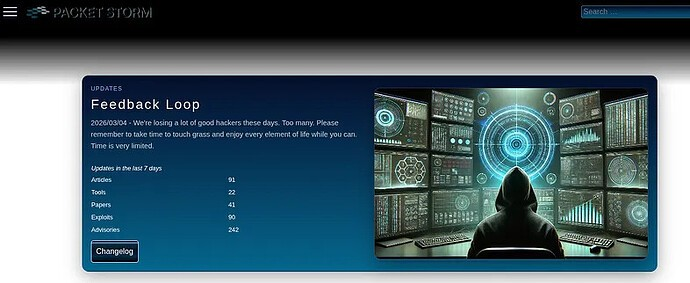
https://packetstorm.news/files/author/10292/1
I began submitting shellcodes, exploits, tools, and other resources to Packet Storm Security starting in 2010, and I came to know the person running the site — a man named Todd, who has always been very kind to me. I sincerely wish him good health and a long life.

Building on my background in electronics, I began building robots in 2013. I documented my projects on a blog at https://sw0rdm4n.wordpress.com , and some of the robots I built can be viewed at https://www.bluedragonsec.com/var/robotic/
In 2013–2015, I was recruited by a state intelligence agency focused on counterterrorism, during a period of heightened concern over the ISIS threat. My responsibilities included tracking the whereabouts of terrorist suspects and conducting penetration operations against radical Islamic websites.
In 2015, I also built a Wi-Fi hacking robot and demonstrated it during an IT security training session I delivered for BPPT (the Agency for the Assessment and Application of Technology).
Press enter or click to view image in full size

The training I conducted at BPPT covered exploitation techniques on Windows — including the fundamentals of stack overflow, Structured Exception Handler (SEH) exploitation, and egg hunters — as well as Linux topics, including remote stack overflow exploitation, bypassing Stack Smashing Protection (SSP) via byte-by-byte brute force, and ASLR bypass using Return-to-libc (ret2libc).
https://www.youtube.com/watch?v=GSlHgUB-yaA (this video actually taken in 2015, reposted 6 years ago)

In 2016, I was engaged by the son of a senior police general in Indonesia, with the task of developing Wi-Fi hacking devices and IMSI catchers. Those who are interested in hardware hacking will likely recognize some of the devices I worked with, such as the RTL-SDR, HackRF, and BladeRF.
I developed an open source dns server for linux and freebsd, it’s called rldns :

GitHub — bluedragonsecurity/rldns: rldns is an open source lightweight DNS server for…
rldns is an open source lightweight DNS server for linux, netbsd, freebsd, and openbsd. Runs on x86 and x86_64. Latest version : rldns-1.4 — released on Feb 2026 I did fids (flight information display system) installations for airports in Indonesia

In 2020, I was less active in the security field because I was busy with my first startup — a solar panel installation service company called Freenergi. With nothing more than business cards, a home office, and a handful of outsourced staff, I boldly launched the venture. Unfortunately, it failed.
https://www.youtube.com/@Freenergi
Undeterred, I attempted another startup — Robotsoft — which produced IoT devices that I designed and built myself.

Sadly, this venture also failed. I continued attempting additional startups through 2025, but all of them ultimately ended in failure.
It is worth noting that I have been running all of these businesses entirely on my own. Perhaps one day I will find success if I have the right business partner.
From 2003 to 2024, I regularly concealed my identity in underground circles, never using my real name. Over the years, I adopted various nicknames, including mranton, ev1lut10n, sw0rdm4n, b4tm4n, wisdom, and d4r3d3v1l. Today, I use my real name — Antonius — for the purpose of advancing my professional career in IT security.
I practice biohacking . Some of the simple biohacking methods I regularly follow include consuming herbal supplements.
The herbs I frequently consume include:
“Actually, there are other biohacking techniques that I practice to make my face look younger, but for certain reasons, I can’t share them.”
And I practice 4 different martial arts : muay thai, tae kwon do, boxing, brazilian jiujitsu
There is a notable IT security community in 2026 called https://0x00sec.org, which I occasionally visit.


RoboMall was developed by Antonius (w1sdom) in 2023, The robot was designed to be operated in a mall. The purpose is that mall visitors doesn't need to visit mall directly, instead, they can use this robot to stroll in a mall and if they deposit in RoboMall wallet system they can buy things on mall, then the goods will be delivered by couriers.
Robotsoft LightBox is a solar powered outdoor lighting. Features : water proof, controlled by voice & android application. This product was created by Antonius (w1sdom). This product was created for his startup Robotsoft in 2020.
Robotsoft FloorLight is a solar powered outdoor lighting. Features : water proof, controlled by voice & android application. This product was created by Antonius (w1sdom). This product was created for his startup Robotsoft in 2020.
Robotsoft Torch is a solar powered outdoor lighting. Features : water proof, controlled by voice & android application. This product was created by Antonius (w1sdom). This product was created for his startup Robotsoft in 2020.
Solar Powered Electrical Generator. This generator created by Antonius (w1sdom). This product created for his startup Robotsoft in 2020.
This is an exploit for CVE-2026-46215 (Linux Kernel Use After Free) Adapted for Linux 7.0 !!! This exploit is more stable and reliable than the first exploit I released.
This is an exploit for CVE-2026-46215 (Linux Kernel Use After Free) Adapted for Linux 7.0 !!! WARNING !!! this exploit is not stable ! sometimes, this exploit might cause kernel panic !
2026 Buptlab Dns Relay Server Remote Dos - for Linux. Lame remote denial of service exploit for buptlab dns relay server. Bug was discovered by Antonius (w1sdom) in 2026.
Lame remote denial of service exploit for litedns dns server - Bug Discovered by Antonius (w1sdom) in 2026.
rldns-1.0 - rldns-1.3 remote denial of service exploit. (rldns is an open source dns server that I developed).
CVE-2022-0847 - Linux Kernel 5.8 < 5.15.25 Local Privilege Escalation Exploit (DirtyPipe 2). github : https://github.com/bluedragonsecurity web : https://www.bluedragonsec.com
Private Bug !!! Savant Web Server 3.1 Post Method Buffer Overflow Denial of Service via HTTP Post. Vulnerability in HTTP Post discovered by Antonius. web : bluedragonsec.com - github.com/bluedragonsecurity
Minalic Web Server 2.0.0 Remote Stack Overflow Exploit Via HTTP Post Method - for Windows 32 bit - Python Version. This is the only version in internet that used post method in 2013. Since post method and get method used different code path, you can tell that I found the vulnerability for post method. Exploit target : Windows Server 2003 Service Pack 2, English
MinaliC Webserver Post Method Remote Buffer Overflow Exploit. Affected : MinaliC Webserver 2.0.0. Vulnerability in post method was invented by Antonius in 2013. Original code developed by Antonius in Apr 2013. Code patched in 2026. web : bluedragonsec.com - https://github.com/bluedragonsecurity
Private Exploit !!! EasyFTP Server 1.7.0.2 - 17.0.11 Remote Buffer Overflow. Original code using python 2.6 developed in 2013. Code patched in 2026 -> adjustment for python3. Exploit developed by Antonius (w1sdom) - bluedragonsec.com - https://github.com/bluedragonsecurity
Private Exploit !!! EasyFTP Server 1.7.0.2 - 17.0.11 Remote Buffer Overflow. Original code using python 2.6 developed in 2013 ported to C (Linux), patched in 2026. Exploit developed by Antonius (w1sdom) - bluedragonsec.com - https://github.com/bluedragonsecurity
Private Exploit !!! CVE-2012-10023 FreeFloat FTP Server 1.0 Remote Stack Overflow Exploit. Code : Antonius (w1sdom) - bluedragonsec.com. Original code developed in 2013 - exploit patched in 2026 https://github.com/bluedragonsecurity
Stack-based buffer overflow in MinaliC Webserver 2.0.0 allows remote attackers to execute arbitrary code via a crafted HTTP POST request. The overflow occurs in the URI parsing routine when processing the POST method, which follows a separate code path from GET. Existing CVEs for MinaliC do not cover this vulnerability. Discovered by Antonius in 2013.
Affected : MinaliC Webserver 2.0.0Buffer overflow in Savant Web Server 3.1 allows remote unauthenticated attackers to crash the server (denial of service) via a crafted HTTP POST request with an oversized URI and body. Existing CVEs for Savant cover the GET-method overflow only. This vulnerability uses the POST method which hits a different code path. Discovered by Antonius in 2013.
Affected : Savant Web Server 3.1curr_end becomes stale after VMA merge in mseal_apply(), leading to incorrect sealing state. Affects Linux kernels 6.17–7.0-rc5. Fix authored by Lorenzo Stoakes (Oracle). Vulnerability discovered by Antonius
Affected : Linux 6.17 – 7.0-rc5Heap OOB read vulnerability in rldns 1.3 DNS server. Fixed in rldns 1.4 with comprehensive fuzzing via honggfuzz and improved input validation. Vulnerability discovered by Antonius.
Affected : rldns 1.3Type Confusion / Cross-Cache Free (Slab Cache Confusion) in the Linux Kernel (versions ≥ 6.3 and < 6.12.82). This vulnerability involves a pointer allocated within Cache A but subsequently freed into Cache B. Discovered by Antonius.
Affected : Linux net/bpf · fix: 0f42e3f4fe2aOut-of-bounds Read leading to Denial of Service (DoS). Vulnerability discovered by Antonius.
Affected :Remote Heap-Based Buffer Underflow, 1-byte Heap Underwrite / Out-of-Bounds Write, Network-triggerable via crafted UDP DNS packet. Vulnerability discovered by Antonius.
Affected :Part 5 of x86_64 linux remote stack overflow exploitation series from bluedragonsec.com
Part 4 of x86_64 linux remote stack overflow exploitation series from bluedragonsec.com
Part 3 of x86_64 linux remote stack overflow exploitation series from bluedragonsec.com
Part 2 of x86_64 remote stack overflow exploitation for x86_64 linux, covering ret2plt. The writing is still on a non la57 linux system.
This guide is about basic of remote stack overflow exploitation on x86_64 linux. This one is the first guide from a series.
A story about a lamer who started learning in 1996 and is still a lamer in 2026.
This is a very old write-up about CVE-2005-0575 Remote Exploitation, this is very old and might not be relevant anymore ! you have been warned ! I forgot when I made it. This is translated from Indonesian language (as always).
I released 8 pdf(s) Tutorial for Beginner Hacker. I wrote this in January 2026. I translate this materials from Indonesian Language.
Physical Attacks on LAN Networks is part of security training materials that I gave to Indonesian Police. This writing is a translation of some parts of my training materials about physical attacks (I haven't had time to release some details on "how to make the hacking devices", it's planned to be released in the future - the electronic parts & the codes).
Unconventional bio hacking technique to defeat convnet face recognition algorithm ! The Art of Creativity !
Novel UAF exploitation technique targeting the new SLUB sheaves architecture introduced in Linux 7, leveraging union state confusion in slab_sheaf objects for kernel privilege escalation. This is "The Art of Hijacking the Allocator State"
Step-by-step walkthrough of constructing a kernel ROP chain to bypass SMEP & SMAP on Linux Kernel 6.17.
I am Antonius (w1sdom), a security researcher based in Indonesia (but Chinese). I am a polymath type security researcher with strong knowledge in "hardware hacking (robotics)" and "low level exploitation".
I Learnt electronics in 1996 and then learnt to write 16 bit asm virus in 1998-2001.
I combine multiple disciplines in robotics, electronics, low level exploitation, hardware hacking & artificial intelligence to create innovative technologies, novel hacking techniques and low level exploitation techniques.
w1sdom, sw0rdm4n, ev1lut10n, d4r3d3v1l, jck.marshall (one time usage), ringlayer, robotsoft, mranton, 黑蝎子, Prof. Robotsoft, Mr. Robot, etc...
Zodiac : Scorpio.
Born : 198x
INTJ - Polymath
Developed in 2014, this legendary Linux Kernel Rootkit was engineered to target Linux kernel versions 2.6.x through 3.x. Developed by Antonius (w1sdom / sw0rdm4n / ev1lut10n) --> https://packetstorm.news/files/id/128945
Trojanized version of openssh-8.0p1 where the ssh client will log the ssh username and ssh password into /opt/.../log.txt. Build 2024 - by Antonius (sw0rdm4n)
Lightweight DNS server · Linux / NetBSD / FreeBSD / OpenBSD · x86 / x86_64. Developed by Antonius (w1sdom / sw0rdm4n / ev1lut10n) - version 1.0 was released in 2017 --> https://packetstorm.news/files/id/141606
Ftrace-based LKM rootkit · Linux Kernel 5.x–6.2 · x86_64 - developed in 2023 by Antonius (w1sdom / sw0rdm4n / ev1lut10n) --> https://packetstorm.news/files/id/174805
FreeBSD 13 KLD rootkit · file / process / port hiding · bind shell - developed in 2023 by Antonius (w1sdom / sw0rdm4n / ev1lut10n) --> https://packetstorm.news/files/id/174806
LKM rootkit · Linux Kernel 5.x–6.2 · persistent - developed in 2023 by Antonius (w1sdom / sw0rdm4n / ev1lut10n) --> https://packetstorm.news/files/id/174789
Linux userland rootkit · file / process / port hiding by Antonius (w1sdom / sw0rdm4n / ev1lut10n) --> https://packetstorm.news/files/id/174790
Modified Cowrie for SSH man-in-the-middle attacks by Antonius (w1sdom / sw0rdm4n / ev1lut10n)
The first hacker robot that I created. This robot was developed in 2014. Some demo videos were posted in Youtube around 2016. This robot can explains about low level exploitation techniques. Robot skills : can hack wifi (wpa cracking using aircrack), evil twin, wifi deauth, arp cache poisoning. My old video channel --> https://www.youtube.com/@antoniusringlayer/videos
I planned to develop a spy robot, but this robot was too big. The chassis was created using metals. Developed in 2017, posted in youtube around 2019. Developed by Antonius (w1sdom)

Airhax is a wireless network auditor gadget. This device was created in 2015. This gadget functions : wifi cracking, evil twin, wifi deauth, arp poisoning. Developed by Antonius (w1sdom / sw0rdm4n / ev1lut10n / robotsoft)
I built this robot in 2014. It is a shy robot that is afraid of humans. I used 3 ultrasonic sensors.
A large-scale prototype robot powered by a mini PC and an Arduino, built as a personal project rather than a commercial product. At first, I planned to equip it with high-torque servos and an airsoft gun, but I realized that could be dangerous, so I scrapped the idea. Real hacking should be harmless. Build 2017 - by Prof. Antonius Robotsoft

Various Robots (finished and unfinished) - build by Antonius Robotsoft (w1sdom).
The home of the website
Electronic gadgets, robots, hacking devices, IOT, electrical generators from Robohax, Robotsoft and Bluedragonsec.
Prototypes for DIY gadgets, robots and quadcopters related to security that I developed.
My Low level exploits developed from 2001-2026
Videos about low level exploit developments, hardware hacking & prototypes.
Security vulnerabilities that I have discovered
Papers related to hardware hacking and low level exploitation.
Mostly about hardware hacking and low level exploitation.
About my website
Hacking tools, rootkits and open source projects that I developed


